
- Home /
- Industries /
- Power & Energy Generation
- Industries · Power & Energy Generation
Power & Energy Generation
Coal-fired thermal power stations are among the largest producers of bulk by-products in heavy industry. Pulverised coal combustion in boilers generates fly ash — a fine, dry, pozzolanic material collected at electrostatic precipitators (ESPs) and bag filters across multiple plant locations.
A single large thermal power unit may generate substantial volumes of fly ash per day, requiring continuous and reliable collection, conveying, storage, and dispatch. Fly ash utilisation — for cement blending, concrete production, road embankment, and brick manufacturing — has become an environmental and commercial imperative for power utilities.
Beyond fly ash, power plants also handle coal from receipt through to boiler feeding: coal unloading from wagons, stacker-reclaimer operations, and in-plant belt conveying. Limestone is consumed in flue gas desulphurisation (FGD) units at many newer plants. Bottom ash from boiler hoppers must also be managed.
- Operational Challenges
Four critical material handling challenges in cement plants.
Understanding these operational pain points drives SaveEco’s system design philosophy — every solution starts with a site audit, not a product catalogue.
01
Continuous ESP Hopper Evacuation
02
Fly Ash Dispatch Logistics
03
Long-Distance Intra-Plant Conveying
04
Environmental Compliance
- Engineering Solution
SaveEco Engineering Solutions for Power Plants
SaveEco’s system portfolio covers the full range of cement plant material handling requirements — from inbound raw material reception through in-plant transfer to outbound dispatch.
01 Series (Master-Slave) Dense Phase Conveying — ESP Hopper Systems
02 Twin (Tandem) Vessel Conveying — Silo-to-Dispatch Transfer
03 Rail Wagon Unloading and Loading Systems
04 Road Bulker Systems — Fly Ash Dispatch
05 Waste Heat Recovery Systems
- Typical Plant Applications
Eight proven application points across the cement plant lifecycle.
These are the most common application points where SaveEco systems are deployed in integrated cement plants. Each has been proven across multiple installations in India and internationally.
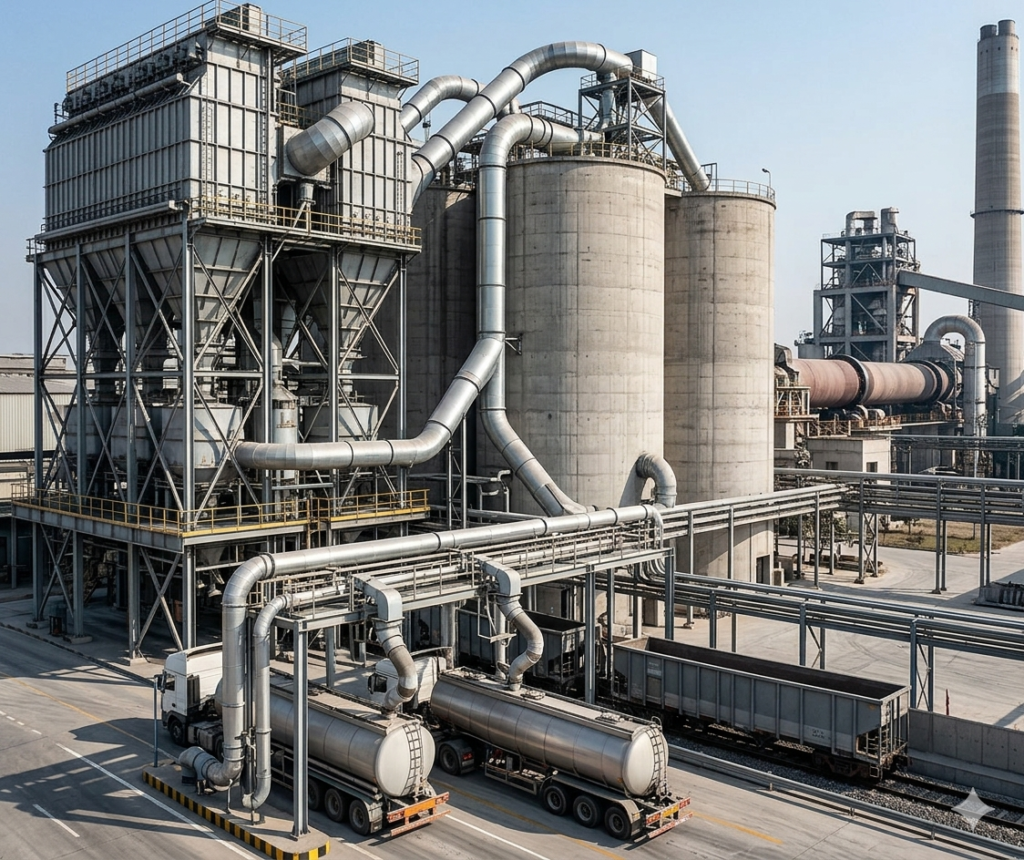
- ESP hopper fly ash collection and conveyance to storage silos
- Fly ash silo filling from multiple ESP collection points
- Fly ash dispatch via road bulker loading stations (dust-free)
- Fly ash rail wagon loading for inter-plant dispatch
- Limestone handling for FGD systems — receiving, conveying, and silo storage
- Bottom ash handling and disposal system integration
- Plant vacuum housekeeping for turbine hall, boiler bays, and ESP galleries
- Waste heat recovery from flue gas or steam system for process applications

- Why SaveEco for Cement
Operational Benefits
Continuous ESP Evacuation
Prevents hopper overflow and boiler de-rating — maintaining full ESP performance and avoiding costly unplanned shutdowns caused by hopper blinding.
Enclosed Transfer
Enclosed fly ash conveying and loading eliminates ambient dust dispersion — meeting environmental compliance obligations at ESP fields, silos, and dispatch bays.
Fly Ash Utilisation Support
Rail and road dispatch systems support fly ash utilisation targets — enabling utilities to meet MOEFCC fly ash utilisation norms through efficient, dust-free commercial dispatch.
Reduced Pipe Wear
Dense phase low-velocity conveying reduces pipe wear in long-distance ash lines — significantly extending maintenance intervals and reducing replacement costs.
Automated Operations
Automated systems reduce manual intervention in dusty, high-temperature environments — improving operator safety and shift consistency across continuous operations.
Waste Heat Recovery
Waste heat recovery reduces auxiliary fuel costs and improves overall plant efficiency — converting recoverable flue gas energy into productive process heat or steam.
- Start Your Industrial Consultation
Discuss Your Power Plant Requirement
Contact SaveEco’s engineering team with your plant layout, ESP configuration, fly ash volumes, and dispatch requirements. We respond with a technical proposal, not a product catalogue.