
- Home /
- Industries /
- Ports & Bulk Terminals
- Industries · Ports & Bulk Terminals
Ports & Bulk Terminals
Dry bulk ports and inland freight terminals are critical nodes in the bulk material supply chain. They handle large volumes of imported and exported commodities — cement clinker, fly ash, limestone, gypsum, alumina, and other industrial minerals — across ship, rail, and road transport modes.
Terminal throughput depends directly on the speed and efficiency of inter-modal bulk transfer — from ship hold to terminal silo, from silo to rail wagon, from rail to road bulker. Dust generation during these operations is both a compliance risk and a product loss problem, making enclosed pneumatic conveying the preferred technology for fine dry bulk handling at terminals.
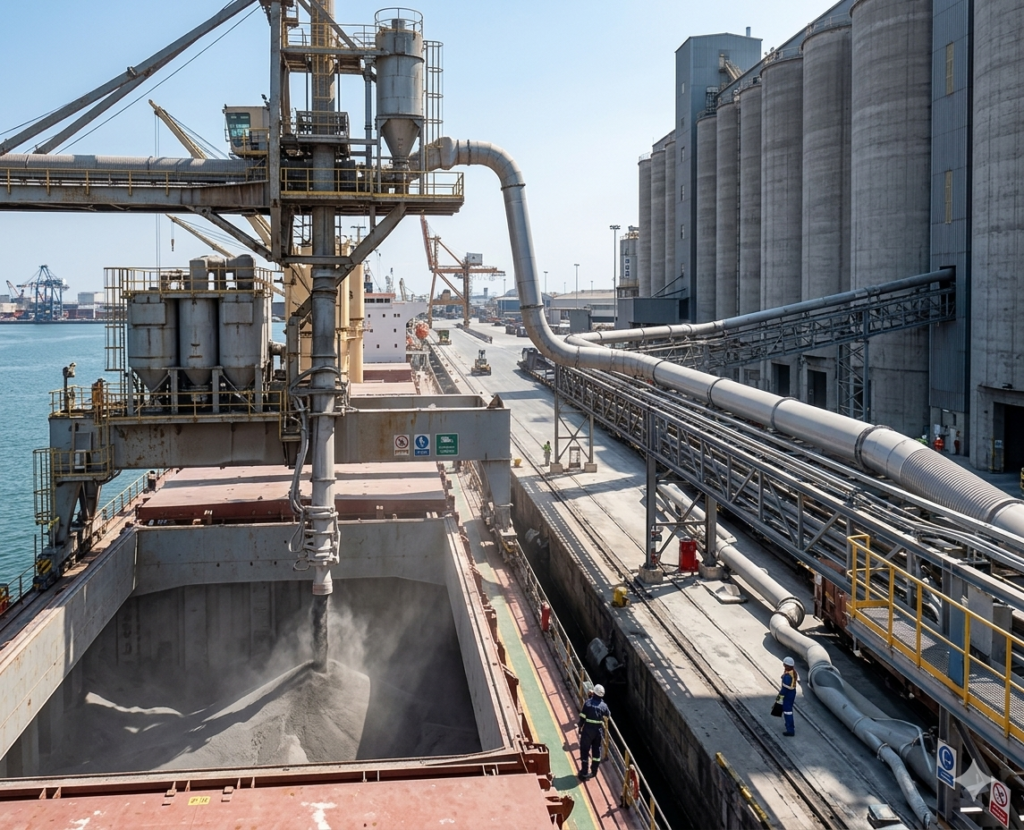
SaveEco’s ship transfer systems cover both Specialized Bulk Carriers and Open Hatch vessels, making them applicable across the range of dry bulk shipping formats used in the Indian coastal and international trade.
- Operational Challenges
Four critical operational challenges at ports & bulk terminals.
Understanding these operational pain points drives SaveEco’s system design philosophy — every solution starts with a site audit, not a product catalogue.
01
Fast Ship Unloading Turnaround
02
Dust Dispersion in Marine Environments
03
Multi-Modal Transfer — Ship to Silo to Road/Rail
04
Variable Vessel Types and Cargo Conditions
- Engineering Solution
SaveEco Engineering Solutions for Ports & Bulk Terminals
SaveEco’s terminal system portfolio covers the complete material flow from vessel unloading through silo storage to road bulker, rail wagon, and tank container dispatch — integrated under one EPC responsibility.
01 Ship Transfer Systems — Specialized Bulk Carriers and Open Hatch
02 Dense Phase Conveying — Ship Hold to Terminal Silo
03 Road Bulker Dispatch — Terminal-to-Plant Logistics
04 Rail Wagon Loading — Onward Dispatch by Rail
05 Tank Container Systems — Specialist Cargo Handling
- Typical Plant Applications
Eight proven application points across port and terminal operations.
- Ship hold pneumatic unloading for cement clinker, fly ash, alumina, and limestone
- Ship-to-silo pneumatic conveying transfer
- Terminal silo storage — aeration, level measurement, and discharge systems
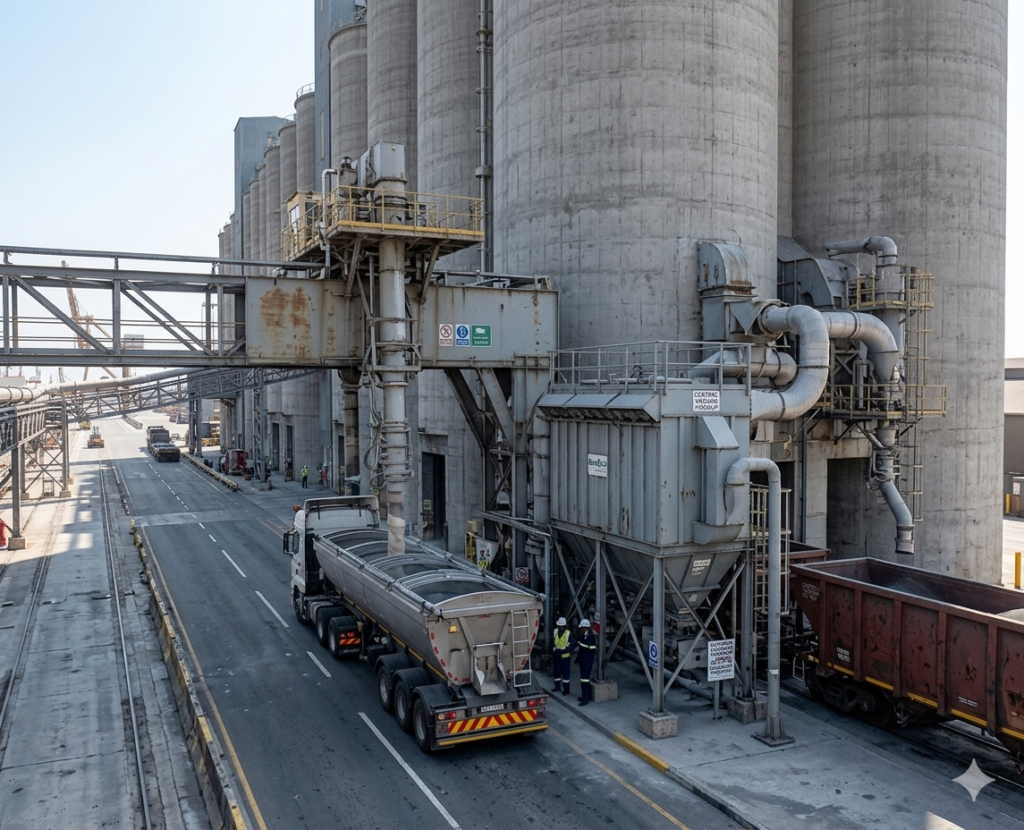
- Road bulker loading from silo — dust-free enclosed loading
- Rail wagon loading for onward dispatch — automated and semi-automated stations
- Tank container discharge at inland terminal or plant receiving station
- Centralised dust collection at ship unloading, silo filling, and bulker loading points
- Silo venting bag filter systems for dust-free silo filling
- Why SaveEco for Cement
Operational Benefits
Faster Port Turnaround
High-capacity pneumatic ship unloading reduces vessel port call time — directly cutting demurrage costs and improving berth utilisation.
Enclosed Transfer
Eliminates cargo dust dispersion at terminal and surrounding areas — meeting environmental compliance obligations and preventing product loss.
Multi-Modal Integration
One platform for ship, rail, and road — unified system infrastructure reduces operational complexity and maintenance burden at the terminal.
Automated Operations
Automated loading and unloading reduces terminal labour requirements — improving shift consistency and reducing dependency on manual intervention.
Material Integrity
Dense phase conveying protects fragile bulk materials from particle degradation — preserving product quality from ship hold to final delivery point.
Modular Expansion
Modular system design supports terminal capacity expansion — additional silos, loading bays, and vessel berths integrated into existing infrastructure.
- Start Your Industrial Consultation
Discuss Your Port/Terminal Requirement
Contact SaveEco’s engineering team with your plant layout, material specifications, and throughput requirements. We respond with a technical proposal — not a product catalogue.